
Kane County Address History Sources
No single roll names every person tied to a Kane County address. The best source depends on the year and the role being tested. The tax roll is useful for a recent owner, while a directory may identify a person who occupied the house but did not own it. A deed proves a recorded property interest, not residence. Historical maps help confirm that the building and number existed when a directory entry was printed.
| Source | Years It Covers | Where Held | What It Shows |
|---|---|---|---|
| Kane Recorder archive | 1837 to present | Recorder books, microfilm, and LRS | Transfers, parties, plats, and legal descriptions |
| Recorder imaging | 1977 to present | Online and office imaging | Searchable index plus image or abstract route |
| Aurora directories | 1858/59 to present, with gaps | Wegman Center and Historical Society | Names by address; reverse section from 1895/96 |
| Elgin directories | 1875 forward; county volumes from mid-1800s | Gail Borden Public Library | Occupant snapshots and local affiliations |
| Federal census | Released schedules under the 72-year rule | NARA and library resources | Households, relationships, and enumeration context |
| Sanborn maps | Aurora 1885, 1897, 1907, 1957 | Aurora Historical Society and LOC | Building footprint and street-number context |
For a recent address, start with DevNet and the Recorder. For an Aurora or Elgin address before modern imaging, add the local directory shelf and map collection early. Rural parcels may never appear in a city volume, so township, legal description, and Recorder books matter more. Each record should be dated because the named owner, mailing recipient, and resident can all be different people.
Kane County Previous Residents Start
The DevNet Property Tax Inquiry accepts a parcel number, owner name, house number, street name, street type, city, township, subdivision, sale range, and tax-year controls. Save the PIN, situs address, mailing address, owner label, subdivision, and legal-description clues. Situs means the physical location of the parcel. The mailing address is where the tax notice goes and may point elsewhere.
Search All Tax Years can expose a transfer clue in tax history back to 2004, according to the assessor FAQ. A tax record is still only the starting point. Its owner field does not establish who slept at the address or when a household moved. Preserve the tax year and then carry the PIN and legal description into the deed index.
Kane County Past Resident Deeds
The Kane County Recorder land-record search is free and ordinary searching needs no account. Its archive reaches to 1837, but the stated computer and imaging span begins in 1977. Earlier work can require Original Tract books, grantor/grantee books, and microfilm in the Recorder research area. Search both party roles and check initials, middle names, spelling changes, and company suffixes.
- Copy the current PIN, owner label, situs address, and legal description from DevNet.
- Find that owner as grantee in the Recorder index, then open the acquisition instrument when available.
- Record the instrument number and date, document type, grantor, grantee, PIN, and legal description.
- Search the seller as a grantee to locate the preceding purchase, and repeat the same checks.
- When imaging ends or the description changes, use office books, tract indexes, and microfilm.
- Grantor and grantee
- The grantor transfers an interest; the grantee receives it.
- Chain of title
- The linked sequence of instruments that traces recorded interests over time.
- Legal description
- The land description used in instruments, often more stable than an old street number.
Kane County Previous Resident Records
The Recorder explains the long record span on its archive and office overview. That source also documents deeds, mortgages, releases, judgments, liens, easements, plats, military land grants, and surveyor field notes. These instruments do not all mean the same thing. A mortgage or lien should never be reported as a change of occupant.
The manifest capture below shows the official source used for the previous-residents deed trail.
The archive view supports the 1837 record scope and the need to move beyond online imaging for early chains.
Kane County Past Address Changes
A sound search tests the number before attaching a name. Aurora underwent a mass renumbering in 1928, and its 1929 directory contains an old/new number conversion index. Elgin records citywide changes in the 1870s, 1884, and 1895. One Elgin building can therefore have three historical numbers. A structure may also have moved or disappeared.
Compare a directory entry with a Sanborn footprint, abstract of title, and a map from the same period. Aurora Historical Society identifies Sanborn maps for 1885, 1897, 1907, and 1957. A 2007 county resolution also changed a duplicate Fieldstone Drive in Mill Creek to Fieldstone Lane. This local example shows why the current GIS label may not match an older deed.
Kane County Resident Directories and Census
Directories bridge the years between transfers. Aurora volumes begin in 1858/59 with gaps, and address-by-street sections appear from 1895/96. Gail Borden describes Elgin directories from 1875 forward and Kane County volumes from the mid-1800s. The Library of Congress house-history method explains how alphabetical and address sections connect a place to successive occupants.
- Check the alphabetical section for the surname and copy the exact address, spouse, and occupation when printed.
- Check a reverse street section, if that edition has one, and read nearby lines for the block context.
- Compare the nearest released federal census schedule, allowing for ward and enumeration-district changes.
- Record conflicts instead of merging people who share a surname or street number.
The official research method is shown in the source capture below.
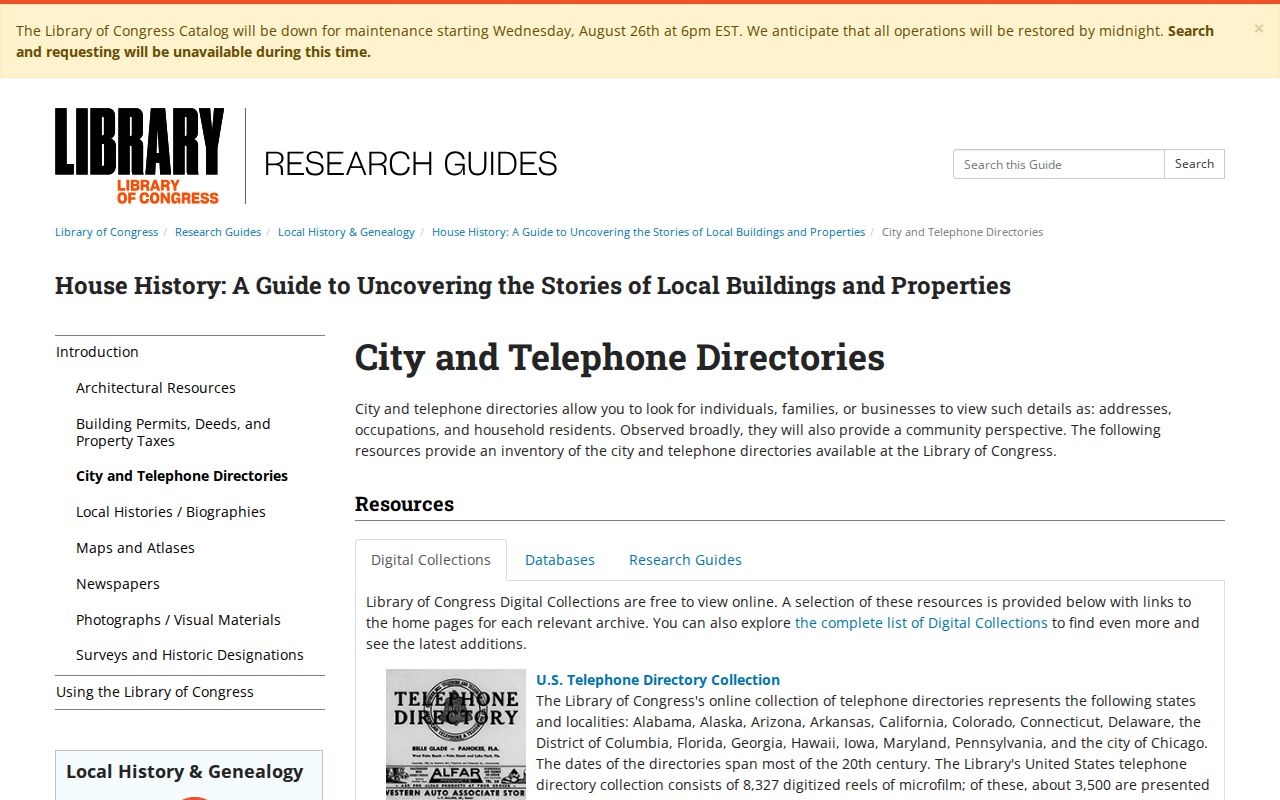
Its value is methodological: a directory is a dated occupancy lead, while the deed remains a separate ownership record.
NARA also catalogs Aurora volumes for 1929 and 1931 through 1934, plus Elgin volumes for 1903, 1920, and 1927 through 1930. The related NARA directory holdings provide a federal fallback.
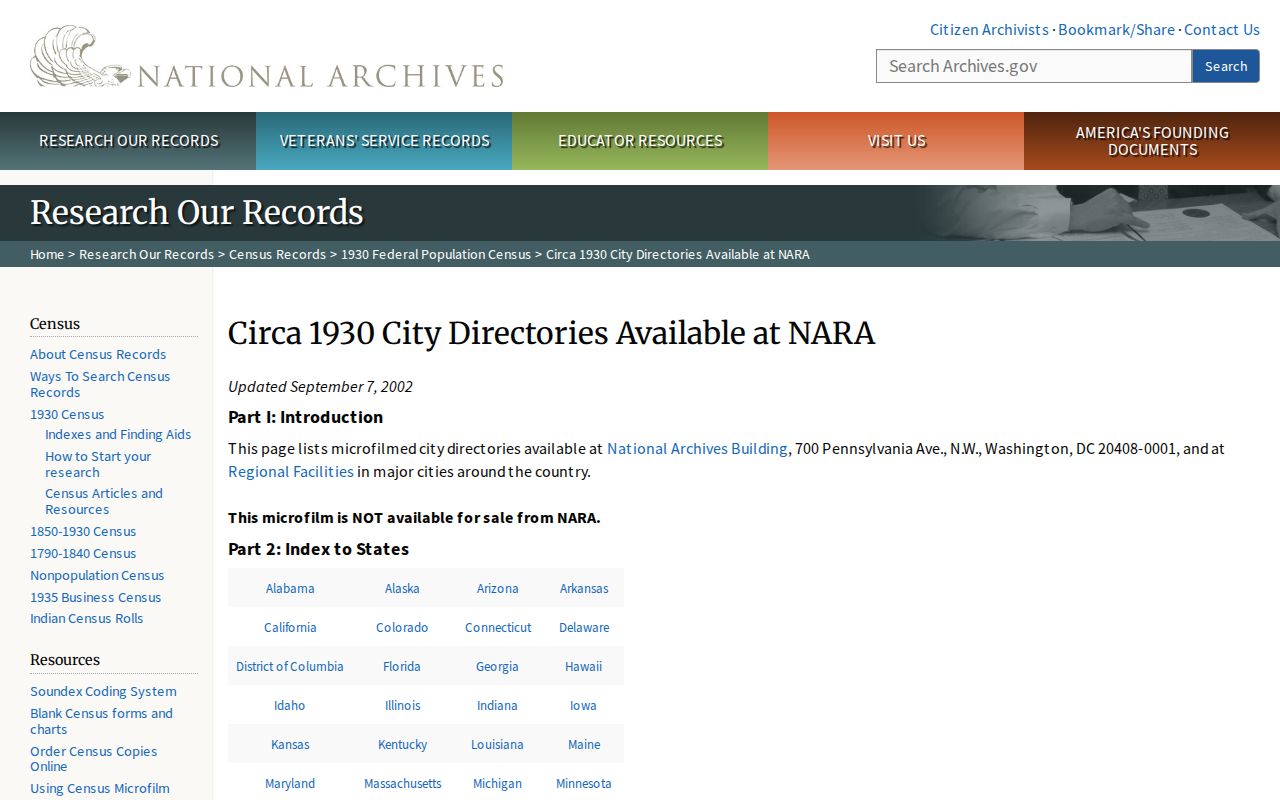
Repository metadata should be cited with the city, year, volume, and page rather than treated as proof of a resident by itself.
Missing Kane County Resident Records
Kane County suffered record loss in an 1843 fire. On March 13, 1890, another courthouse fire saved bound volumes but burned about 5,000 court files. An absent historical case is not proof that no dispute or probate matter existed. Check deeds, newspaper indexes, directories, and IRAD descriptions for a parallel trail.
The county history account documenting that loss appears in this Kane County historical record source.
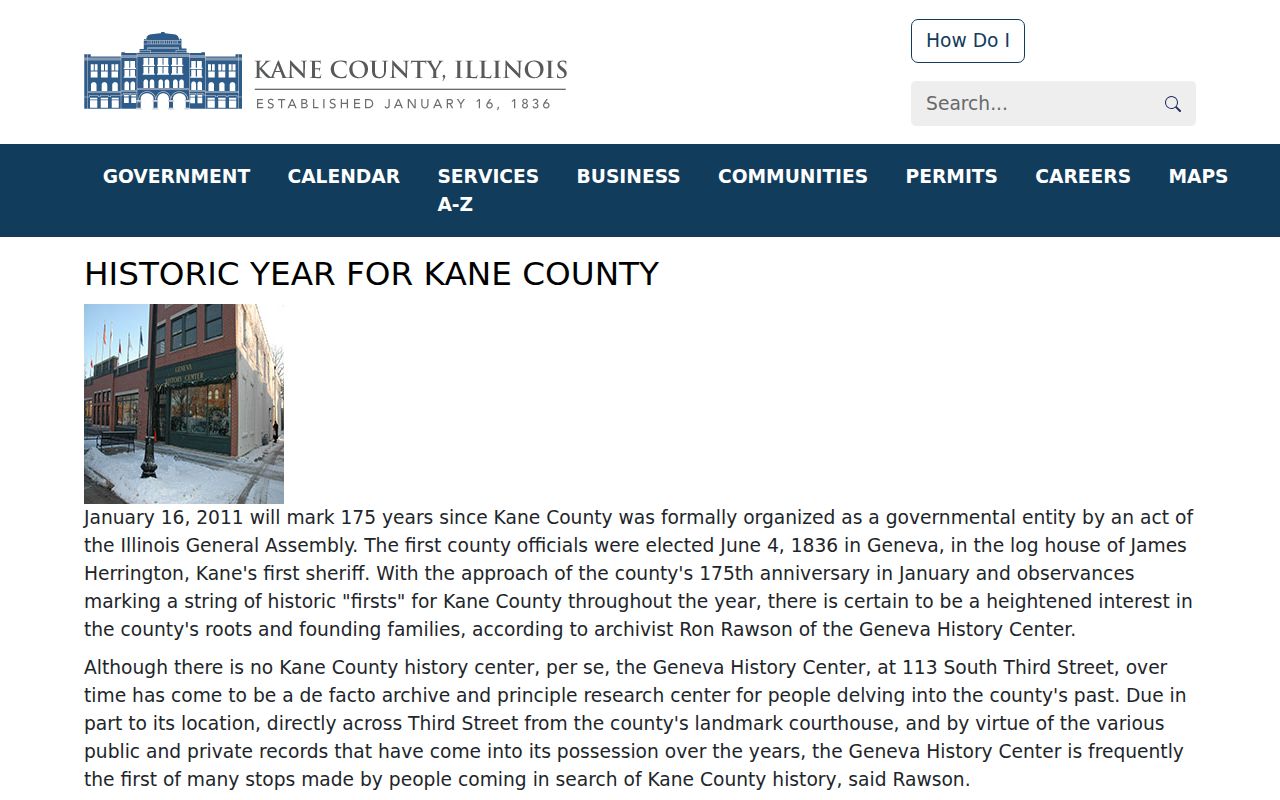
The surviving books and local collections make reconstruction possible, but any unresolved gap should remain clearly labeled.
Kane County Resident Permit Clues
Building and code files can date a change at the property even when they do not identify everyone who lived there. Aurora eTRAKiT includes permit, project, inspection, and code-violation routes. Elgin's permit search offers Address, Application Number, Parcel Number, and Name modes, with separate Street Number and Street Name fields in address mode. Unincorporated parcels route to Kane County Development and Building & Zoning. Coverage varies, so a missing online result should lead to the city clerk or county department rather than a claim that no work occurred.
Ask for the street address, PIN, permit or case number, record type, and a narrow date range. A permit may name an owner, applicant, contractor, inspector, or violation date. Those are distinct roles. The record can explain when a structure was built, altered, repaired, or demolished, but it cannot supply a full roster of previous residents.
Probate can close a different kind of gap. Aurora Historical Society describes probate inventories that may show property, heirs, and values. Active probate files belong with the Kane County Circuit Clerk, while transferred historical series may appear through IRAD at Northern Illinois University. An index hit is only a lead. Request the underlying inventory, order, or file, then compare its names and property description with the deed chain and obituary evidence.
Municipal jurisdiction must be checked before filing a request. Aurora, Elgin, Geneva, Batavia, and St. Charles maintain their own local records, while county Building & Zoning covers unincorporated land. Start with the city portal when the parcel lies inside city limits. If it is outside a municipality, or the city result is empty, try the county route. A written Illinois FOIA request should seek an existing permit, inspection, code order, or plan by address and date instead of asking staff to explain the property's history.
Log Kane County Address Evidence
A simple evidence log prevents similar names and recycled house numbers from collapsing into one story. Give each row a source title, custodian, record date, access date, page or instrument number, street number as printed, legal description, named person, and that person's role. Add a separate field for the modern address. When a directory uses an old Aurora or Elgin number, preserve both versions and cite the conversion source.
Rank records by what they actually prove. An instrument image is stronger for a transfer than a search-result snippet. A same-year reverse directory is stronger for reported occupancy than an owner's mailing address. A census household can establish relationships on its enumeration date, but not every year before or after it. An obituary may link relatives and a place, yet a library index entry is only a pointer until the article is read.
Negative results also belong in the log. Note spelling variants, initials, married names, corporate forms, PIN punctuation, date ranges, and which office books were checked. Fires, directory gaps, moved buildings, and boundary changes can explain an absence. State that the trail remains unresolved when the legal description changes or two people cannot be separated. Careful limits make the final account of previous residents more useful than a confident guess.
Confirm Kane County Past Households
Previous residents become more certain when several dated sources agree. Aurora's Beacon obituary index has more than 113,000 entries, while Gail Borden provides an Elgin Newspaper and Vital Record Index and in-library newspaper access. Bluff City Cemetery ledgers, Lake Street Memorial Park records, and probate inventories can add death, heir, and property context. None proves a street address unless the underlying record actually states it.
Aurora Public Library offers house-history help at 630-264-4117. Gail Borden offers one-on-one help at 847-695-2442. The Kane County city directories page covers those collections in depth. Ask staff for the exact volume, date, page, index entry, or source image. This keeps a compiled index from being mistaken for the record itself.
Lawful use. Research past residents for house history, genealogy, estate work, or personal curiosity. Never use an address trail to stalk, harass, threaten, or track a living person.
Note: A title holder, tax-roll owner, mailing recipient, and directory occupant are separate roles until dated records show otherwise.